Rotary’s Journey to Inclusivity
There is no way that I would have been allowed into my dad’s Rotary Club. He belonged to Denver Rotary 31, the first club in Denver (1911) and the 31st in the world. He was everything a Rotarian of his era was expected to be…exceptional. He was an endocrinologist who’d been a founder of The Denver Clinic, the Chairman of The American College of Physicians, a Dean at CU Medical School, and had an ethics course at Notre Dame named in his honor.
He’d served as chair for the Denver Board of Health under Mayor Tom Currigan. He’d joined Denver Country Club for gosh sakes!
Me, long before dad joined DCC, I was a caddy there. I brought home stories about the Phipps brothers, H. Brown Cannon (Meadow Gold), the unnamed golf pro who smelled of alcohol at 6 am, and the 36 hole rounds I “double A” caddied (two bags) while working on my future melanomas. I kept track of the good tippers, the burger buyers (after the 9th hole, my favorites), the slicers, the hookers, and my fellow caddies and their prowess at basketball, horseshoes, and storytelling. That was just one of my 32 lifetime jobs (jack of all trades, master of none). Being recruited into an exclusive Rotary Club was not where my stars were aligning.
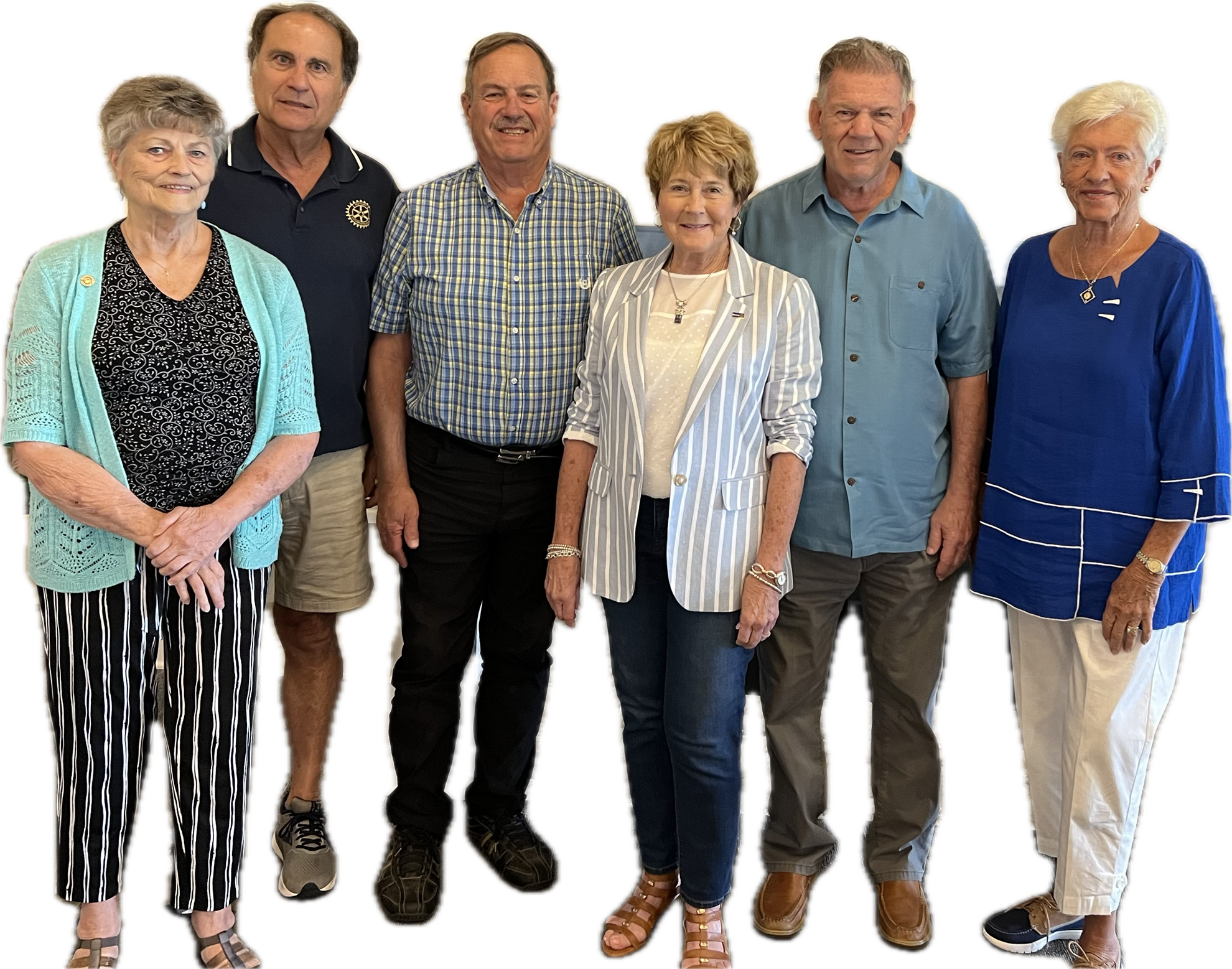
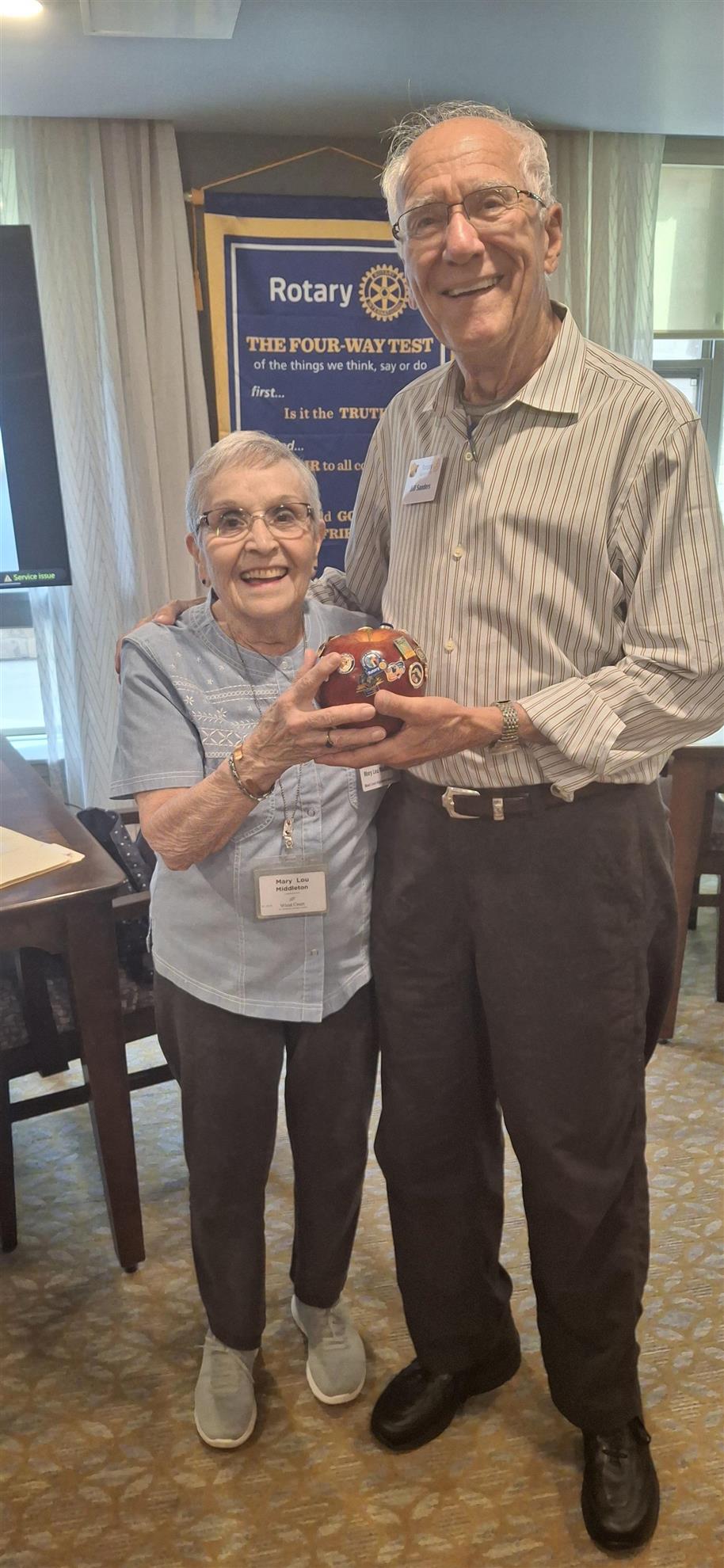
Happily for me, Rotary traded in its exclusivity for inclusivity. Please take a moment to look at a video that I made, at the suggestion and participation of Bill Simmermon, of our founding members (pictured above) and the decisions that made the inclusion of women, and hard to categorize folks like me, welcome.
https://youtu.be/vUjrodsDETQ?si=Cqe2r4ZbessZ3jm2
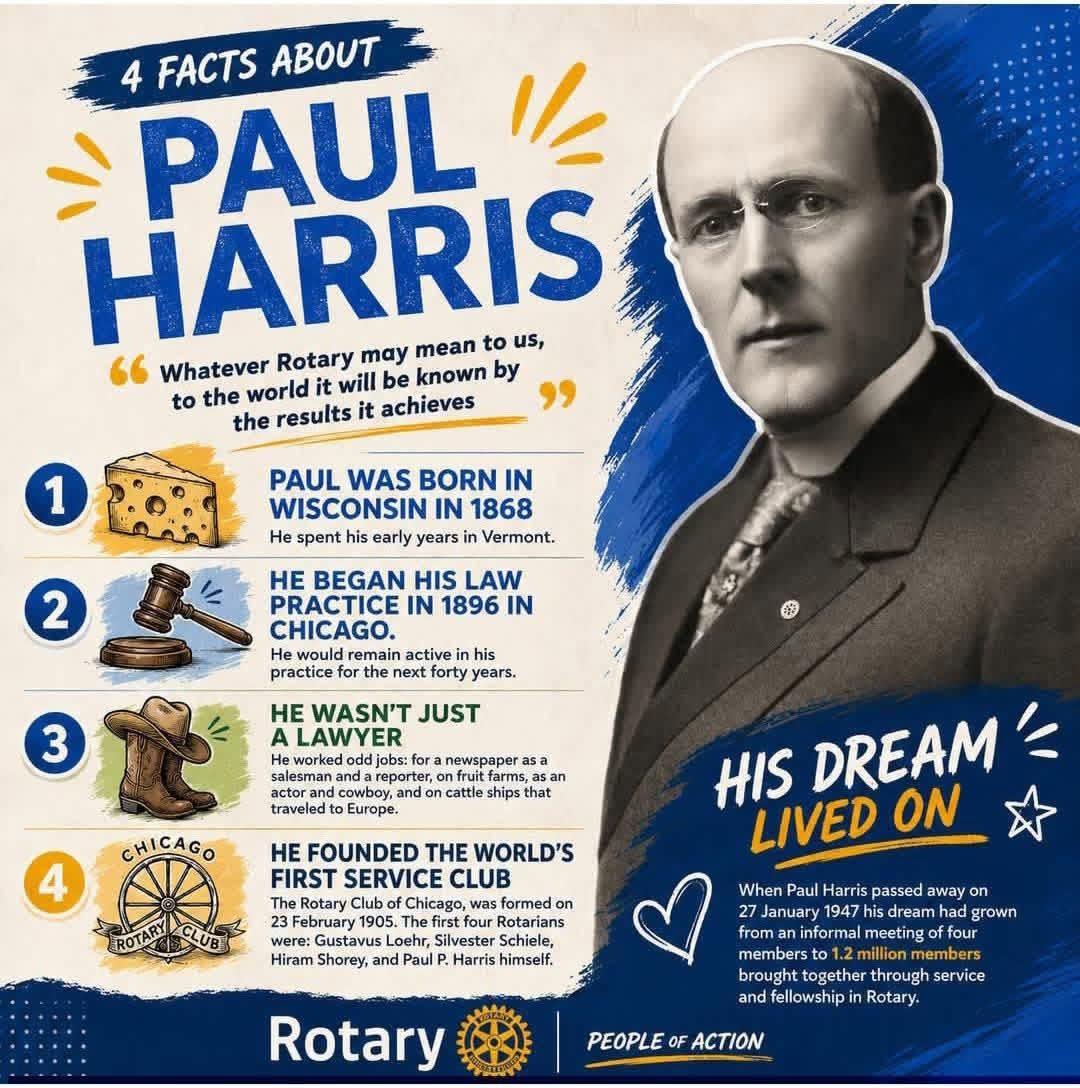
Here, for those who may not know (or need a refresher) is a bit of the Rotary story.
The journey toward inclusion is one of the most significant transformations in its history. Founded as an organization for business and professional leaders, Rotary gradually expanded its understanding of service and leadership to embrace people of all genders, races, cultures, religions, and backgrounds. This evolution reflected broader changes in society while remaining faithful to Rotary's core ideal of "Service Above Self."
Since its founding in 1905, Rotary has grown from a small business fellowship in Chicago into one of the world's leading humanitarian organizations. Throughout its history, Rotary has continually adapted to meet the needs of a changing world. One of its most important developments has been its commitment to becoming a more inclusive organization, welcoming members from diverse backgrounds and ensuring that opportunities for service and leadership are available to all.
Rotary was founded by Paul P. Harris, whose vision was to create a club where professionals could build friendships while serving their communities. In its early years, membership reflected the social norms of the time. Clubs were composed exclusively of men, and many communities had limited participation by women and minority groups in business and professional life. Rotary's membership policies mirrored these societal patterns rather than challenging them.
As Rotary expanded internationally, its members encountered cultures, traditions, and perspectives that enriched the organization. The growth of Rotary beyond North America demonstrated that effective service depended on cooperation across national, ethnic, and religious boundaries. Humanitarian programs addressing disease prevention, education, clean water, maternal and child health, peacebuilding, and economic development required collaboration among people with different experiences and expertise.
The most visible milestone in Rotary's movement toward inclusion came with the admission of women. During the 1970s, several clubs questioned the longstanding policy excluding women from membership. One of these, the Rotary Club of Duarte in California, admitted women despite Rotary's rules and was subsequently removed from Rotary membership. The club challenged the decision in court, arguing that discrimination based on gender violated California's civil rights laws.
The legal dispute culminated in the landmark 1987 decision by the Supreme Court of the United States in Board of Directors, Rotary International v. Rotary Club of Duarte. The Court ruled that Rotary clubs could not exclude women from membership under California law. In response, the Council on Legislation in 1989 voted to amend Rotary's constitutional documents, officially opening membership worldwide to qualified women.
The inclusion of women transformed Rotary. Women quickly assumed leadership roles at the club, district, and international levels. Their participation broadened the organization's talents, strengthened community projects, and introduced new perspectives on service. A historic milestone occurred in 2022 when Jennifer E. Jones became the first woman to serve as President of Rotary International, demonstrating how fully women had become integral to the organization's leadership. Now we have our newest President from Nigeria, Olayinka Babalola.
Rotary has worked to expand inclusion across cultures, races, religions, and generations. Today, clubs exist in more than 200 countries and geographic areas, bringing together members from a wide variety of professions and backgrounds. Rotary emphasizes that diversity strengthens service by allowing clubs to better understand and address the needs of their communities.
Programs such as Rotary Youth Exchange, Rotaract, Interact, and Rotary Peace Fellowships have further broadened participation by engaging young adults, students, and emerging leaders from around the world. These initiatives help cultivate future generations of Rotarians while fostering mutual respect and cross-cultural understanding.
Modern Rotary recognizes that diversity, equity, and inclusion are essential to effective service. The organization encourages clubs to reflect the communities they serve by welcoming people of different ages, ethnicities, cultures, abilities, beliefs, and life experiences. Rather than viewing diversity as simply a social objective, Rotary sees inclusion as a practical strength that improves collaboration, innovation, and community impact.
Rotary's evolution toward inclusion illustrates its ability to grow while remaining true to its founding ideals. "Service Above Self" calls upon members to value the dignity and contributions of every individual including those, like myself, who don’t fit into a “classification.” By opening its doors to women and embracing diversity in all its forms, Rotary has become a stronger, more representative organization capable of serving an increasingly interconnected world. Its history demonstrates that organizations thrive when they welcome all who share their commitment to friendship, ethical leadership, and humanitarian service.
I believe that my dad would have approved of its evolution. After all, he was a Republican who ended up canvassing for Clean Gene McCarthy. People and institutions are capable of change and that, in my opinion, is a good thing.